
Blocked Drain Exeter: What to Do Next
- kanepaul
- Apr 23
- 6 min read
A blocked drain Exeter homeowners wake up to on a wet weekday morning is rarely a small inconvenience. It usually shows up as a sink that will not empty, a foul smell near the kitchen or bathroom, or water backing up where it should not. When that happens, most people want the same thing - a clear answer, quick help, and a local plumber who can sort it without fuss.
If you are dealing with slow waste water, unpleasant odours, or repeated plumbing issues around the home, the key is to act early. What starts as a minor blockage can soon turn into overflowing fixtures, water damage, or a more disruptive repair. The good news is that many warning signs are easy to spot, and getting the right support quickly can stop the problem from getting worse.
Signs of a blocked drain in Exeter homes
Most drainage problems do not appear all at once. In many homes, there are a few early signs before the situation becomes urgent. Water draining more slowly than usual is one of the most common. You might notice it first in the kitchen sink, the shower tray, or the basin in the bathroom.
Bad smells are another clear warning sign. If waste water is not moving away properly, trapped debris can start to smell. That often shows up as a stale or unpleasant odour near plugholes, especially in rooms that are used every day.
You may also hear gurgling sounds after water goes down the sink or when the toilet is flushed. That noise can point to air being trapped in the pipework, which often happens when there is a partial blockage somewhere along the line. If more than one fixture is affected at the same time, the issue may be deeper in the system and worth getting checked sooner rather than later.
What usually causes the hooking and backing up
In most homes, drainage problems build up gradually. In the kitchen, grease, food waste, soap residue and coffee grounds are common culprits. They do not always cause a full blockage straight away, but over time they stick to the inside of the pipe and narrow the flow.
In bathrooms, hair, soap scum and toiletries are often behind the problem. Even products labelled as flushable can create trouble once they collect in the pipework. Outside, leaves, silt and root growth can all interfere with underground drainage, especially after periods of heavy rain.
The exact cause matters because the right fix depends on what is happening and where. A simple build-up near a sink waste pipe is very different from a more stubborn issue further down the system. That is why some jobs can be sorted quickly, while others need proper investigation.
What you can safely try first
If the problem is minor and local to one sink or basin, there are a few sensible steps you can take before calling in a professional. A plunger can sometimes shift a small blockage, especially if the water is draining slowly rather than not at all. Removing visible debris from the plughole may also help.
Hot water and washing-up liquid can be useful for light grease build-up in kitchen waste pipes, but it depends on the cause. If the blockage is caused by solid debris or something lodged further along, this is unlikely to solve it. It may improve things temporarily without clearing the real problem.
It is best to be cautious with shop-bought chemical cleaners. They can be harsh on pipework, unpleasant to handle and often do not deal with the root cause. If they fail, they can also make the job more difficult and messier for whoever comes to inspect the system afterwards.
When to call a plumber for blocked drain Exeter issues
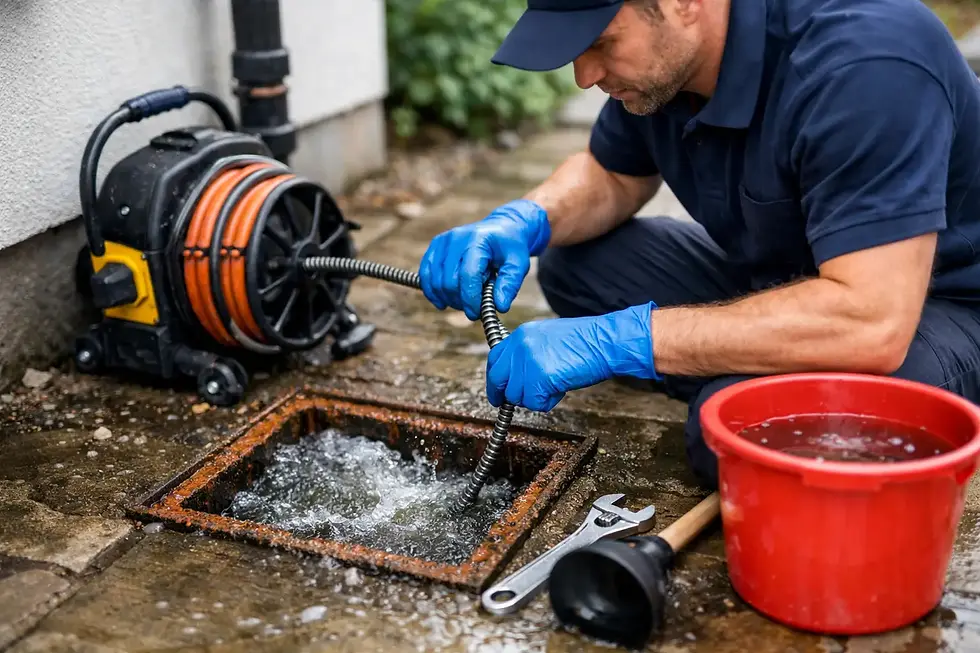
There is a point where trying to sort it yourself stops being practical. If water is backing up, if the same problem keeps returning, or if several fittings in the property are affected, it is time to get professional help. The same applies if there are strong smells outside, signs of leaking, or any concern that wastewater is not draining away properly.
A local plumber can assess the issue properly, identify where the blockage is, and deal with it in a safer and more reliable way. That matters because repeated temporary fixes can waste time and money. A proper diagnosis helps prevent the same disruption happening again next week.
For landlords and letting agents, speed matters even more. Drainage problems can quickly become a tenant complaint, a hygiene issue or a property maintenance headache. Getting someone local in Exeter to attend promptly can reduce downtime and limit the knock-on effects.
Why local experience matters
When you need help with a blocked drain in Exeter, local knowledge is worth having on your side. Property types vary across the area, from older terraced houses with ageing pipework to newer homes with different layouts and access points. What works in one property is not always the right approach in another.
A local plumbing team is more likely to understand the typical issues seen in homes around Exeter and the surrounding area. That can make diagnosis quicker and repairs more straightforward. It also means you are dealing with someone nearby who knows the area and can respond without the delays that often come with larger, less local firms.
For most customers, that local element is not about jargon or technical detail. It is about reassurance. You want someone who turns up, explains the issue plainly, and gets on with solving it.
How a professional approaches the problem
The first job is to work out whether the issue is isolated or affecting a wider part of the drainage system. Sometimes the cause is obvious, but not always. A plumber may start by checking the fixtures involved, testing flow, and looking for signs of a blockage close to the point of use.
If the problem appears deeper in the system, further investigation may be needed. The aim is not just to clear the immediate obstruction but to understand why it happened. That could mean identifying a build-up of waste, damage to a section of pipe, poor flow due to the layout, or an external issue affecting the line.
This is where experience counts. The quickest fix is not always the best long-term fix. In some cases, clearing the obstruction is enough. In others, there may be an underlying problem that needs attention if you want to avoid another callout in a month.
Preventing repeat problems at home
No household can prevent every plumbing problem, but a few habits make a real difference. In the kitchen, avoid pouring fats, oils and grease down the sink, even when they seem liquid. Once they cool, they can cling to the pipework and collect other debris.
In bathrooms, using a simple hair catcher in the shower or basin can cut down on build-up. It is also sensible to be careful about what goes into the toilet or plughole. Everyday convenience products are often the cause of avoidable plumbing trouble.
Regular maintenance can help too, especially in larger households or rental properties where the system gets heavy use. If you have had repeat issues before, it may be worth asking a plumber to inspect things properly rather than waiting for the next problem to appear.
Choosing the right help in Exeter
When people search for drainage help, they are usually not looking for a long technical explanation. They want to know who to call, whether the problem can be dealt with quickly, and if the person attending will be straightforward to deal with.
That is why it helps to choose a plumbing service that focuses on clear communication and practical support. You should expect honest advice, a sensible assessment of the issue, and a plan based on what your home actually needs. Some jobs are simple. Others are more involved. A dependable tradesperson will tell you which is which.
For homes across Exeter, the best approach is usually the simplest one - do not ignore the early signs, do not rely on repeated quick fixes, and get proper help before a small plumbing issue turns into a bigger mess. If something does not seem right with your drainage, trust your instincts and get it looked at. A prompt call today can save a far more disruptive repair tomorrow.


Comments